Background
Nature Observer is an AI-powered Plant identification app that helps visitors identify plants and understand them through photo recognition and guided Q&A. The project responds to a common outdoor learning gap: existing tools can name a plant, but often fail to teach users how to observe or remember it.
Team
Interdisciplinary team of Product Manager, UX/UI Designers, Technical Architects, Data / ML teammates, and Analyst, with backgrounds in Information, Computer Science and Environment.
My role
- /01Synthesized insights from 106 survey responses and 15 interviews to define user needs around lightweight plant learning, guided observation, and post-visit review.
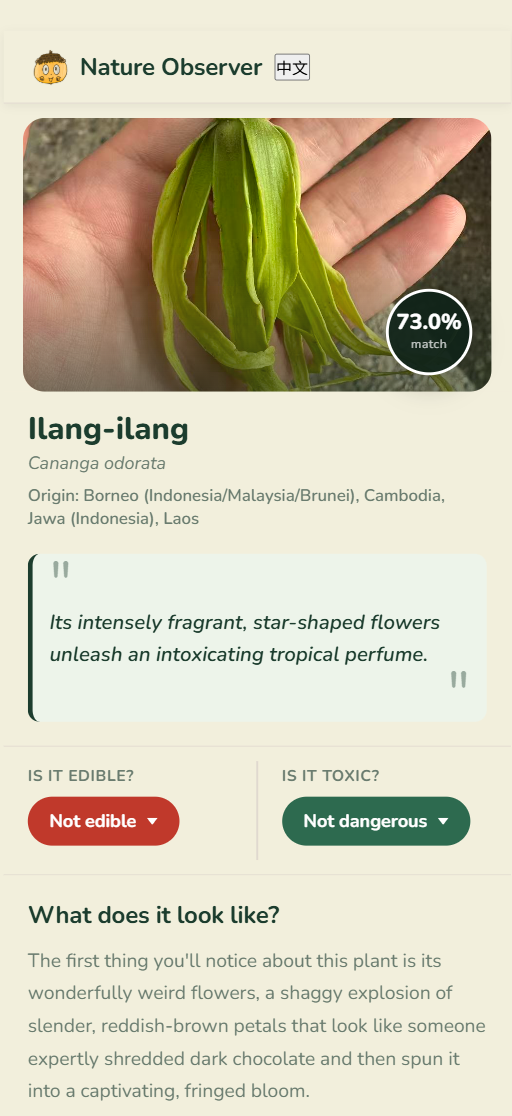
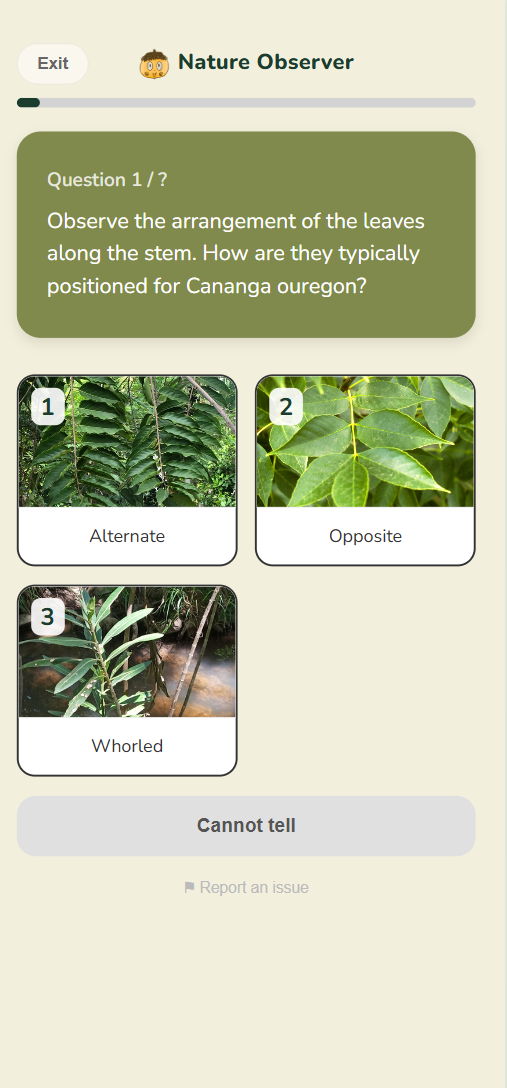
- /02Designed the core plant learning experience, including photo recognition, fun fact story, interactive Q&A, and bullet-point summary.
- /03Collaborated with AI and engineering teammates on product feasibility, including recognition flow, RAG-supported content structure, and MVP implementation.
Problem
👉 A LITTLE BACK STORY …
Nature Observer reimagines how visitors learn about plants in botanical gardens.
Botanical gardens like Matthaei Botanical Gardens attract thousands of visitors each year who are curious about the plants around them. Yet most learning still happens through static labels and printed signage.
We saw a clear gap in today’s plant identification experience — between visitor curiosity in the moment and tools that support meaningful, lasting learning.
Problems of the current experience
Passive learning experience
Plant labels and signage provide information, but the experience often remains one-directional and text-heavy, making it difficult to keep visitors actively engaged.
Difficulty identifying and understanding plants
Visitors may be curious about what they see, but they often lack accessible tools to identify plants, or understand ecological context in the moment.
Limited continuity after the visit
Once visitors leave the garden, there are few ways to review what they discovered, continue learning, or connect their visit to a broader understanding of nature.
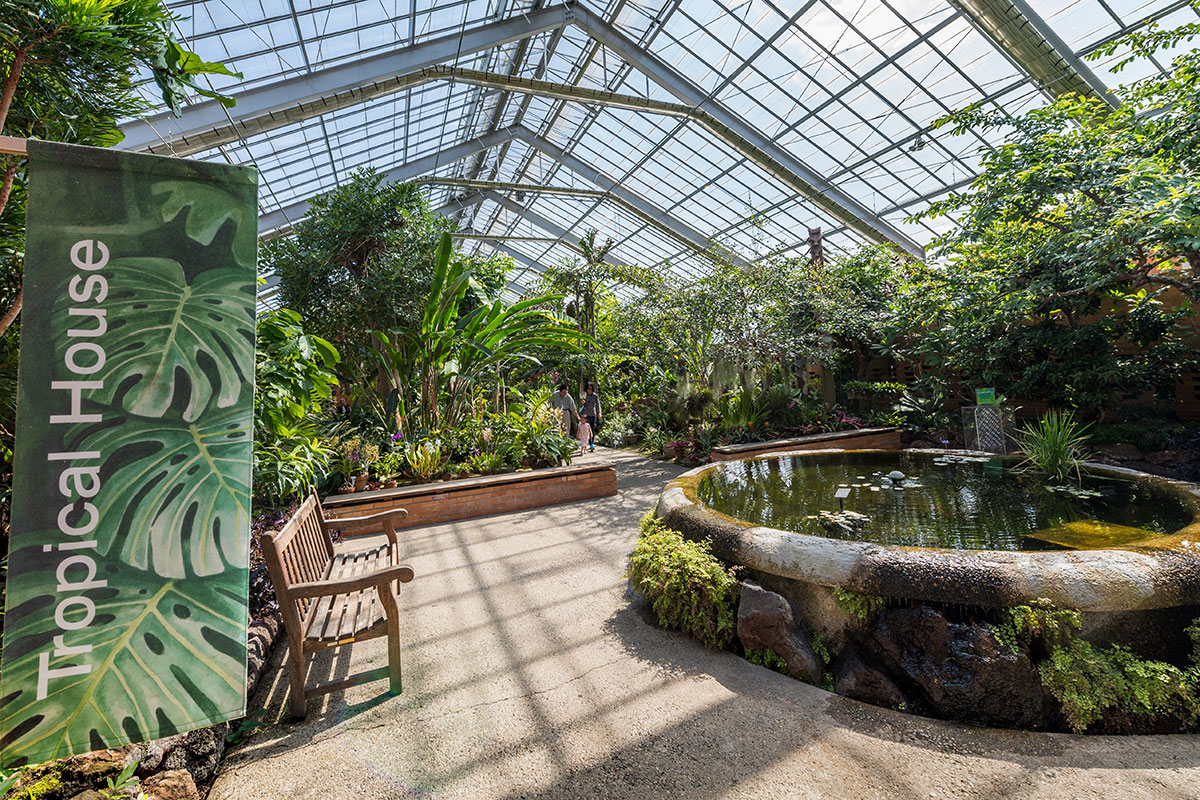
Matthaei Botanical Gardens
⚖️ COMPETITOR ANALYSIS
Today's tools can name a plant — but rarely help you learn it.
We looked at the existing solutions for plant identification, and explored why so few people in outdoor settings and botanical gardens actually reach for them today.

Google Lens
General visual searchNot a standalone app and mostly returns the Latin name with a list of links. It doesn't help users actually understand the plant they are looking at.

ChatGPT & Wikipedia
Generative AI / encyclopediaAnswers are accurate but extremely text-heavy. After one or two plants, most users lose patience and stop reading.

PictureThis
Plant care appIdentification is a side feature — the core experience is plant care for home gardeners, not learning about plants you encounter outdoors.
🔍 RESEARCH
We talked to 15 people across four groups to understand the plant learning experience.
Most of our insights came from 15 in-depth interviews with people who interact with botanical gardens in different ways — from those who run them, to those who simply wander through.

Botanical Garden Staff
Educators and horticulturists at Matthaei who design programs and care for the collection.

Plant Enthusiasts
Hobbyists and amateur botanists who actively seek out plants and want deeper knowledge.

Garden Visitors
Casual visitors who come to enjoy the space and are curious about what they see.

Garden Volunteers
Community members who help run the garden and often guide visitors during their stay.
Solution
What information does the user really want?
Challenge
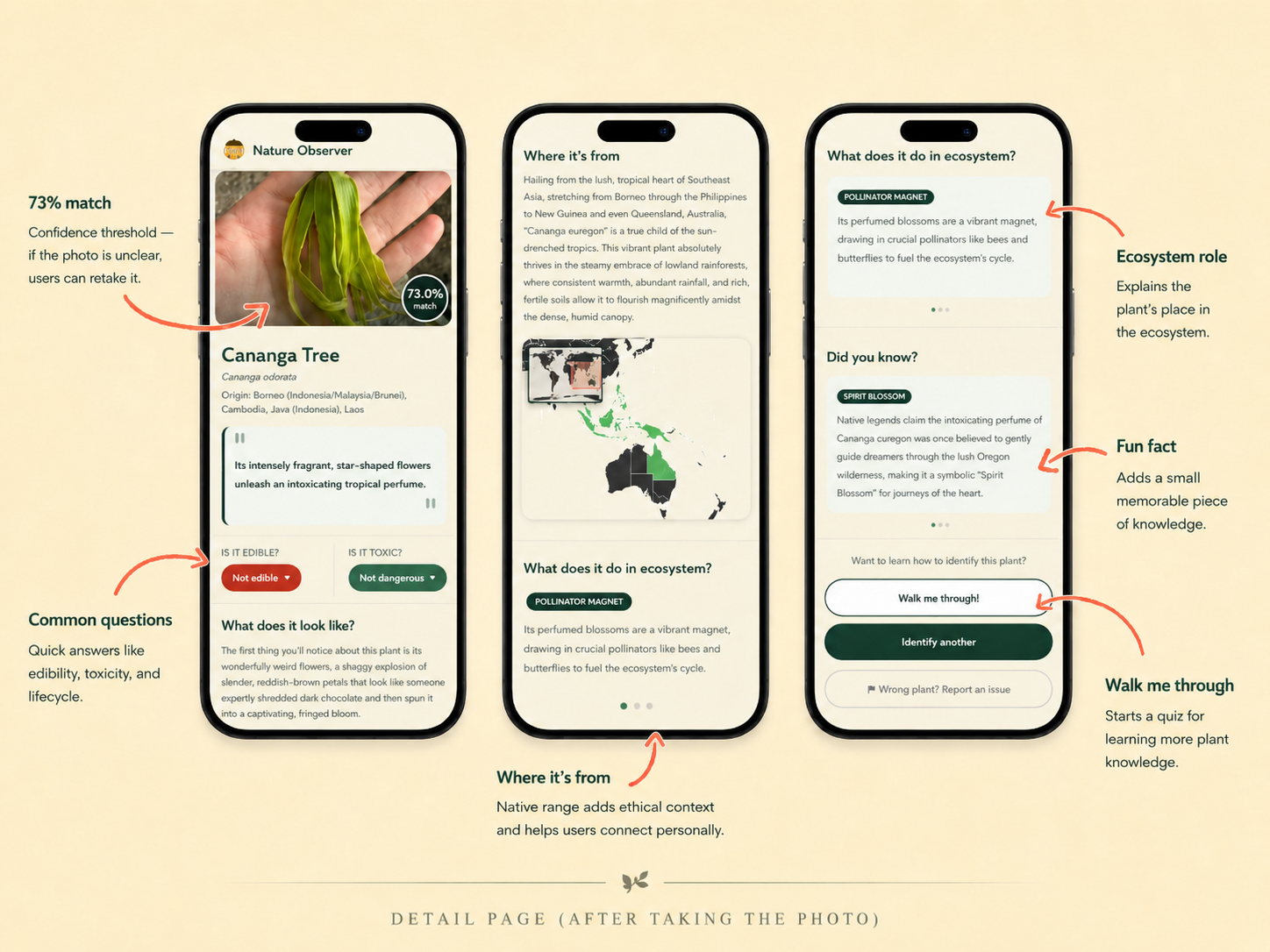
Visitors don't have a quick, accurate way to identify the plants in front of them, and even when they do, it's hard to surface the kind of information they actually care about in the moment.
Solution
We designed a photo-based identification feature paired with content shaped by real conversations: we interviewed garden ambassadors to learn the questions visitors ask most often, worked with the education team to understand which information matters pedagogically, and talked to botanical garden enthusiasts about what genuinely sparks their curiosity.
Next